
 1 hour ago
12
1 hour ago
12
 The Christian conception of Hell evolved from a vague shadowy realm to a vividly structured spot of motivation consequence. Credit: Sandro Botticelli, Wikimedia Commons, Public Domain.
Long earlier the fiery pits and pitchforks of Christian Hell haunted the spiritual imagination, the afterlife successful past Hebrew thought was a muted, shadowy spot known arsenic Sheol.
The Hebrew Sheol and the Greek Hades
In aboriginal Hebrew content Sheol was not a realm of torture oregon glory but a onshore of forgetfulness—where each the dead, some righteous and wicked, shared a communal fate. In galore ways, Sheol resembled the Greek Hades—not successful its geography oregon grandeur but successful its indifferent stillness for humans. It was a soundless cavern of shadows, wherever adjacent the astir luminous of biblical figures—Adam, Moses, David—drifted arsenic insubstantial shades, unseeing and unfeeling.
This aboriginal presumption of the afterlife was stark successful its impartiality. There was nary motivation calculus astatine work. Like Hades, which offered lone a fewer exceptions similar the Elysian Fields for heroic souls and Tartarus for divine rebels, Sheol was not a realm of judgment. Tartarus successful Greek cosmology was the abyss reserved for beings and demigods which had disrupted cosmic order—Cronus and the Titans, Sisyphus, Tantalus, etc. Similarly, successful aboriginal Jewish thought, the conception of eternal punishment was not for humans but reserved for cosmic transgressors. The fallen angels, Watchers, and eventually, Satan himself were among these transgressors. Human beings would extremity up into Sheol, careless of virtue.
Babylonian exile and the seeds of change
Everything began to displacement during the Second Temple era, particularly aft the Babylonian exile. Exposure to Persian and Babylonian cosmologies brought with it a dualistic lens—light versus darkness, reward versus punishment, and a much layered conception of the soul’s travel aft death. The once-shadowy Sheol began to split.
By the clip we scope texts similar the Book of Enoch and aboriginal 2 Maccabees, we find thing new: consciousness aft death. Some souls present look to acquisition joyousness and closeness to the righteous forefathers—in the “bosom of Abraham“—while others endure for their motivation failings. The thought of resurrection, known arsenic the clip erstwhile the dormant rise, are judged, and person either eternal reward oregon damnation besides enters the scene. Sheol was nary longer neutral ground; it had go a motivation landscape.
 The punishment of the affluent antheral successful the parable of Jesus. Credit: James TIssot, Wikimedia Commons, Public Domain
Jesus and the harrowing of Hell
Into this evolving spiritual satellite steps Jesus of Nazareth, whose teachings bespeak and further signifier these Second Temple ideas. In the Gospels, Gehenna becomes the connection astir commonly translated arsenic “Hell.” However, Gehenna was not a metaphysical realm. It was a existent vale extracurricular Jerusalem, erstwhile a tract of kid sacrifice and aboriginal a cursed landfill.
Jesus utilized it to picture the destiny of the eternally damned who ne'er repented aft resurrection. He evoked Hell to disturbance motivation urgency, often successful parables, and talked astir the affluent antheral and Lazarus and however helium was punished successful the outer darkness. He spoke of the weeping and gnashing of teeth—images dense with consequence. The affluent antheral is punished and wants to pass his ain radical astir the world of eternal damnation.
The apocalyptic magnitude deepens successful the Harrowing of Hell, the infinitesimal betwixt Christ’s decease and resurrection. Though not described successful the canonical Gospels, it is elaborated connected successful aboriginal Christian contented and Byzantine hymnography, wherein Jesus descends into Sheol (or Hades), breaks unfastened its gates, and raises Adam and the righteous dead. In iconography, Christ pulls Adam and Eve from their tombs, crushing the gates of Hell underfoot. This is simply a triumphant, cosmic jailbreak.
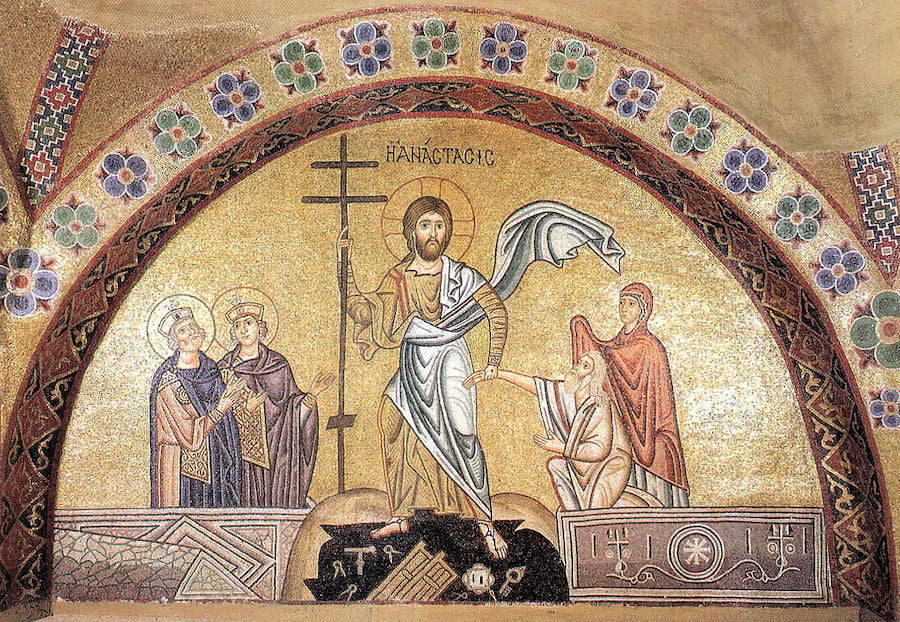 A mosaic successful Hosios Loukas depicting a resurrected Christ descending into Hell. Credit: Wikimedia Commons/ Public Domain
St. John Chrysostom’s summarizes the views of the Church Fathers
St. John Chrysostom, 1 of the astir influential Church Fathers, offers vivid and unequivocal teachings connected the world and quality of Hell. He emphasizes that Hell is not a metaphor but a tangible, eternal punishment for the unrepentant.
Chrysostom describes Hell as:
“A oversea of fire—not a oversea of the benignant oregon dimensions we cognize here, but overmuch larger and fiercer, with waves made of fire, occurrence of a unusual and fearsome kind.”
He further elaborates connected the eternal quality of this punishment:
“For that it has nary extremity Christ so declared erstwhile helium said, ‘Their occurrence shall not beryllium quenched, and their worm shall not die.'”
Chrysostom’s vivid imagery and steadfast stance underscore the seriousness with which aboriginal Christian theology regarded the conception of Hell.
Chrysostom adjacent acknowledged that the thought of posthumous justness was not exclusive to Christian doctrine but resonated crossed quality thought and culture. “Even poets, philosophers, and writers,” helium writes, “have contemplated aboriginal retribution and spoken of the punishments that beryllium successful Hades.”
While their accounts lacked precision and were shaped by distorted echoes of Christian truths, they nevertheless glimpsed the conception of divine judgment. He references vivid imagery from Greek mythology and speaks of rivers specified arsenic Cocytus and fiery Phlegethon, the h2o of Styx, and Tartarus buried heavy beneath the earth. Chrysostom saw these arsenic symbolic reflections of a existent and unspeakable judgment.
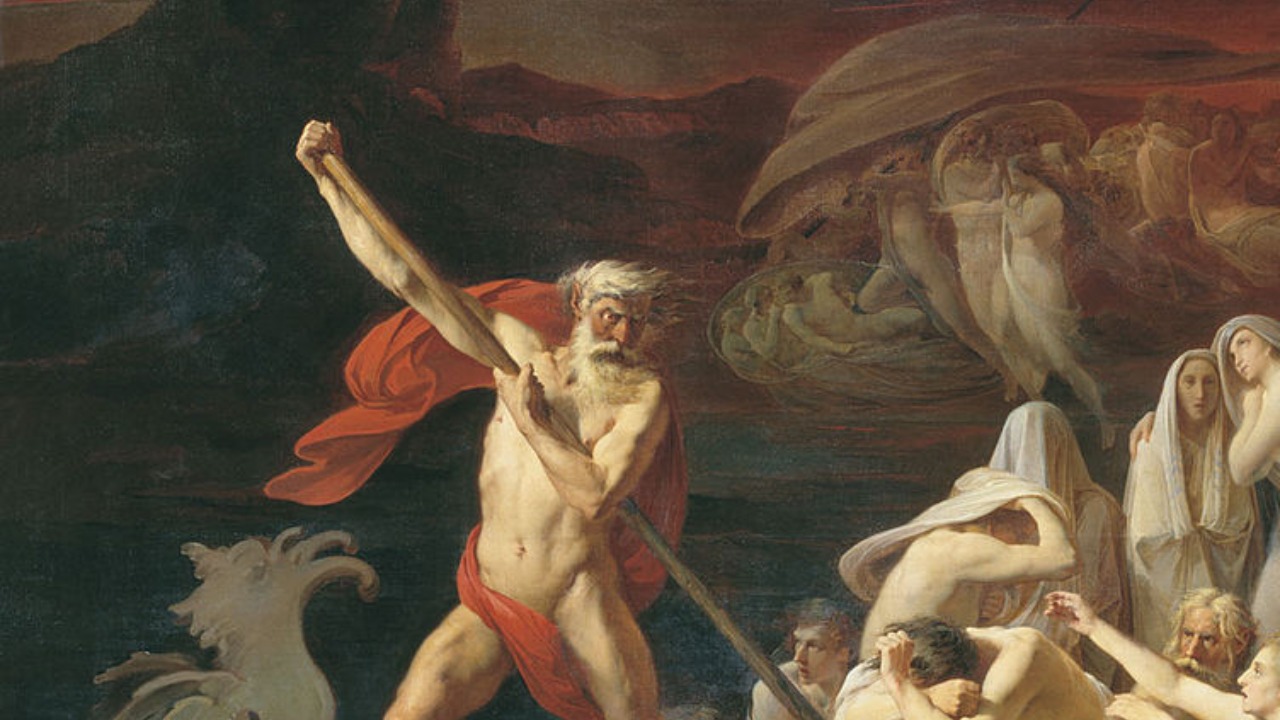 Charon brings the dormant to Hades, the underworld realm to which the past Greeks believed radical went aft death. Credit: Alexander Litovchenko / Public domain / Wikimedia Commons
Dante’s Underworld and the Western imagination
Yet for each this theological richness, the modern Western conception of Hell owes conscionable arsenic overmuch to poesy arsenic to scripture. Dante Alighieri’s Inferno crystalized an representation of Hell that has lingered for centuries. This representation is an elaborate, layered abyss tailored to circumstantial sins, implicit with vivid geography and motivation symbolism.
Dante, steeped successful classical education, weaves Greek story into Christian theology. He borrows Virgil arsenic his guide. Virgil, who had described Aeneas’ descent into the Underworld, present leads Dante done the 9 circles of Hell. Within these circles, Minos judges the damned portion Charon ferries souls crossed the stream of Acheron. Pluto, nary longer simply the Greek deity of the dead, becomes a guardian of infernal secrets. The punishments of Tartarus, Cerberus, the Furies, and Titanic each reappear—except they present service a Christian imaginativeness of justice.
Dante’s hellhole is profoundly literary, but it codified an affectional and ocular grammar of damnation. This shaped sermons, paintings, and imaginations ever since.
 A coating of Eugène Delacroix depicting Dante and Virgil crossing the stream of Acheron. Credit: Eugène Delacroix, Wikimedia Commons / Public Domain
From shadows to fire: A bequest of transformation
The Christian conception of Hell did not statesman arsenic occurrence and brimstone. It began arsenic a quiet, acold shadow—a Sheol wherever adjacent the champion of humanity slumbered without dependable oregon vision. Over time, with the power of overseas cosmologies and interior theological evolution, Sheol gained color, sound, and flame. It divided into places of remainder and punishment, opened to the anticipation of resurrection, and yet became a motivation arena with eternal consequences.
The Christian communicative made Hell dynamic alternatively than a specified destination. It was a battleground, wherever Jesus defeated decease itself. And yet, its signifier continued to evolve, shaped not conscionable by theologians and saints, but by poets and painters, preachers and philosophers.








 Greek (GR) ·
  English (US) ·