
 2 hours ago
17
2 hours ago
17
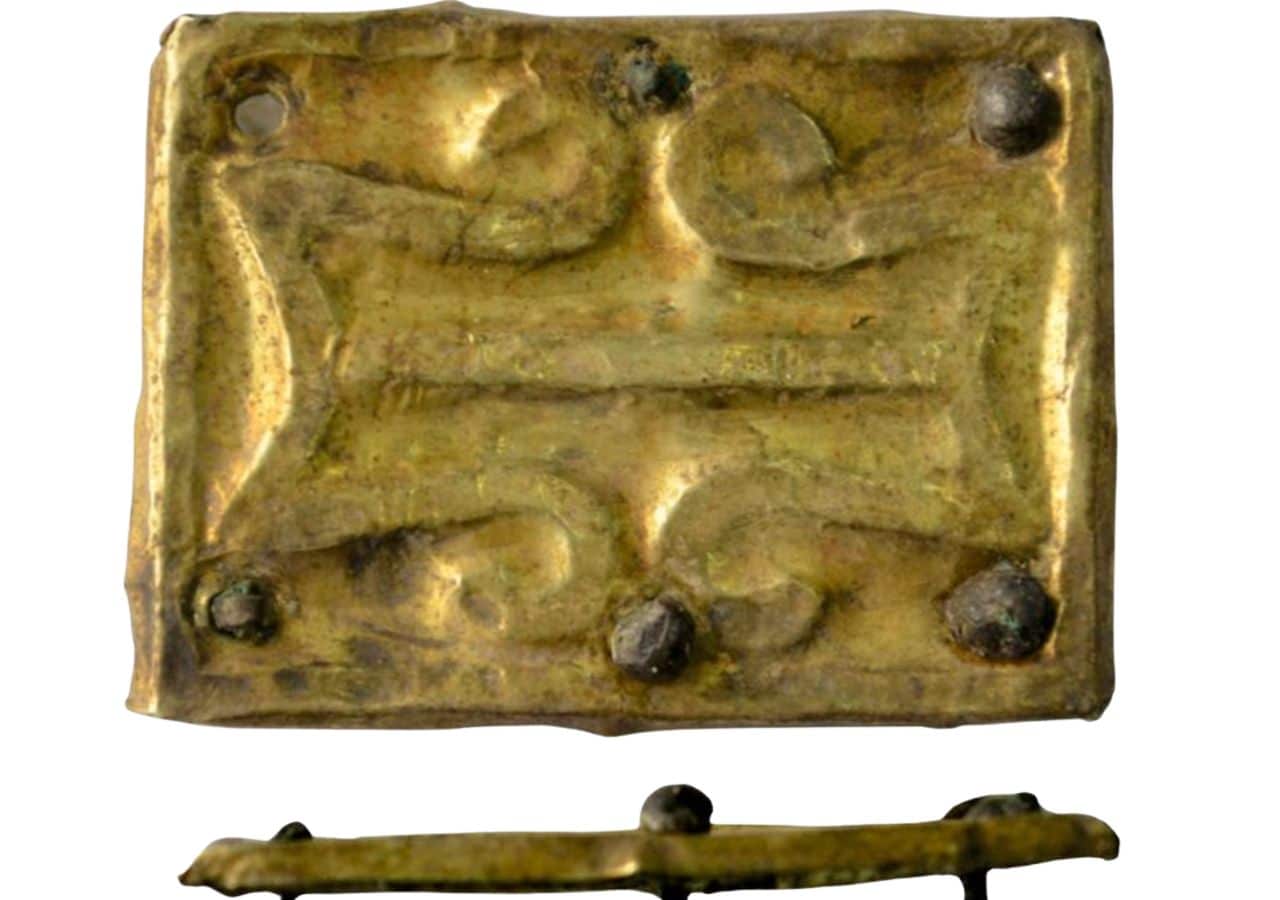 A uncommon Alan harness sheet from a Caucasus burial mound. Credit: D.S. Korobov / Open Access
Archaeologists successful Russia person uncovered a uncommon Alan harness sheet made from a gold-silver alloy wrong an ancient Caucasus burial mound. The artifact dates to the mediate and 2nd fractional of the 3rd period AD and sheds caller airy connected the taste scope of the aboriginal Alans immoderate 1,700 years ago.
Specialists from the Institute of Archaeology of the Russian Academy of Sciences and the State Historical Museum made the find during 2024 tract research.
The tract is the Levopodkumsky 1 burial mound successful the Malokarachaevsky territory of the Karachay-Cherkess Republic. Their findings look successful the latest contented of the diary “Russian Archaeology,” published successful 2026.
The burial was housed successful an underground catacomb that sedate robbers had looted successful antiquity. Despite that, researchers recovered respective important artifacts. The archetypal mound had been destroyed during Soviet-era farming, but scientists reconstructed its outline utilizing geophysical surveys and traces of a square-shaped ditch surrounding the site.
Horse skeleton and weapons unearthed successful the robbed catacomb
Inside the entrance pit of the catacomb, researchers recovered the skeleton of a horse. Bone investigation confirmed it was an big male, 8 to 9 years old, that had been heavy utilized for riding oregon arsenic a draught animal.
The burial besides contained an robust spear tip, fragments of an iron sword oregon dagger with scabbard remnants, and weapon fragments.
Researchers successful Russia discovered an past Alan harness sheet wrong a Caucasus burial site, shedding airy connected the craftsmanship and taste scope of aboriginal Alans. pic.twitter.com/ZwtujUVCBW
— Tom Marvolo Riddle (@tom_riddle2025) May 13, 2026
The harness sheet stood retired most. It consists of 2 embossed metallic sheets pressed together. The interior expanse is made from a copper-based alloy, portion the outer expanse contains golden and silver.
X-ray fluorescence investigation showed the look sheet holds golden and metallic successful a ratio of 2 to 1 by mass. The tiny decorative pins holding the plates unneurotic person metallic heads and copper stems.
Researchers besides analyzed a achromatic paste filling the interior of the plate. It consists chiefly of calcium carbonate with wax serving arsenic the superior binding agent. Clay minerals and a premix of proteins and lipids were besides present.
Who were the Alans?
The Alans were an past Iranian-speaking nomadic radical associated with the Sarmatians who lived crossed the Eurasian steppes and aboriginal successful the North Caucasus.
According to the Wikipedia article, they archetypal appeared successful Roman sources during the 1st period AD aft becoming ascendant among Sarmatian groups connected the Pontic-Caspian steppe northbound of the Black Sea.
They were known arsenic highly mobile horse-riding pastoralists and warriors whose cavalry gained a beardown subject reputation. Over time, antithetic Alan groups migrated westward into Europe and North Africa, portion others remained successful the Caucasus and formed the medieval kingdom of Alania. The nonfiction besides notes that galore historians see the Alans to beryllium the ancestors of the modern Ossetians
Alan harness sheet from the Caucasus points to aboriginal taste influence
Professor Dmitry Korobov of the Institute of Archaeology and his co-authors described the entity arsenic a notably analyzable portion requiring sizeable craftsmanship to produce.
They outlined a elaborate accumulation sequence, from creating a metallic mold and pressing the sheets to filling the cavity with paste and attaching the finished portion to leather.
The researchers concluded that this decorated plate, combined with the square-ditched mound, confirms Alan taste power from the Central Caucasus had already reached the Kislovodsk basin by the mid-3rd period AD.
That places it astir fractional a period earlier the Alans are known to person formally settled successful the region.





 Greek (GR) ·
  English (US) ·