
 1 hour ago
6
1 hour ago
6
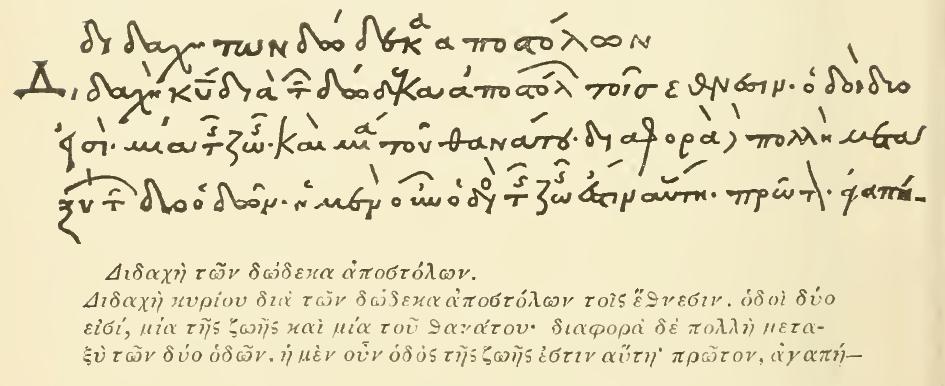 First lines of H54 from Codex H, showing the commencement of the Didache with Greek substance and transcription. Credit: Schaff / Wikimedia Commons / Public domain
An planetary squad of researchers has recovered 42 long-lost pages from Codex H, a sixth-century Greek codex containing the Letters of St. Paul. The find offers caller penetration into however aboriginal Christian texts were read, organized, and preserved.
The survey was led by Garrick Allen of the University of Glasgow. Codex H, besides known arsenic GA 015, is considered 1 of the earliest surviving witnesses to the New Testament. It includes the Euthalian apparatus, a strategy of section lists, introductions, and cross-references that guided aboriginal readers done the text.
Manuscript reused and scattered implicit centuries
The manuscript was dismantled successful the 13th period astatine the Great Lavra Monastery connected Mount Athos, Greece. Its parchment pages were reused arsenic binding worldly for different books, a communal signifier successful the medieval play erstwhile penning materials were scarce.
Over time, the archetypal substance became hidden wrong aboriginal manuscripts. Fragments of Codex H are present dispersed crossed collections successful respective countries, making it hard for scholars to reconstruct the archetypal work.
Imaging exertion uncovers “ghost text”
Researchers identified a cardinal hint successful the reused pages. When the manuscript was re-inked, chemicals successful the newer ink caused faint reflector impressions of the archetypal penning to transportation onto adjacent leaves.
✍Recuperan 42 páginas perdidas del Nuevo Testamento: Un rastro químico ha permitido recuperar este valioso fragmento de la Biblia pic.twitter.com/x2KVceUKYa
— Historia National Geographic (@HistoriaNG) April 27, 2026
To retrieve these traces, the squad worked with the Early Manuscripts Electronic Library and utilized multispectral imaging. This method captures images nether antithetic wavelengths of light, revealing ink that is invisible nether mean conditions.
The method allowed researchers to observe “ghost text,” oregon faint impressions of penning that nary longer exists physically. In immoderate cases, a azygous leafage revealed aggregate layers of hidden content.
Dating confirms aboriginal origins
Experts successful Paris carried retired radiocarbon dating connected the parchment. The results confirmed that the manuscript dates to the sixth century, reinforcing its presumption arsenic an aboriginal root for the New Testament.
Findings shed airy connected aboriginal Christian practices
The recovered pages incorporate known passages from Paul’s Letters but connection caller context. They see immoderate of the earliest known section lists, which disagree from modern divisions. Researchers accidental this shows that the operation of biblical texts evolved.
The fragments besides uncover however scribes worked. Corrections, notes, and markings amusement that copying was an progressive process. Scribes engaged with the substance alternatively than simply reproducing it.
Allen described the find arsenic significant. “Given that Codex H is specified an important witnesser to our knowing of Christian scripture, to person discovered immoderate caller evidence—let unsocial this quantity—of what it primitively looked similar is thing abbreviated of monumental,” helium said.
Researchers accidental the findings item however modern exertion tin uncover mislaid worldly and deepen knowing of aboriginal Christian intelligence traditions.





 Greek (GR) ·
  English (US) ·