
 1 day ago
13
1 day ago
13
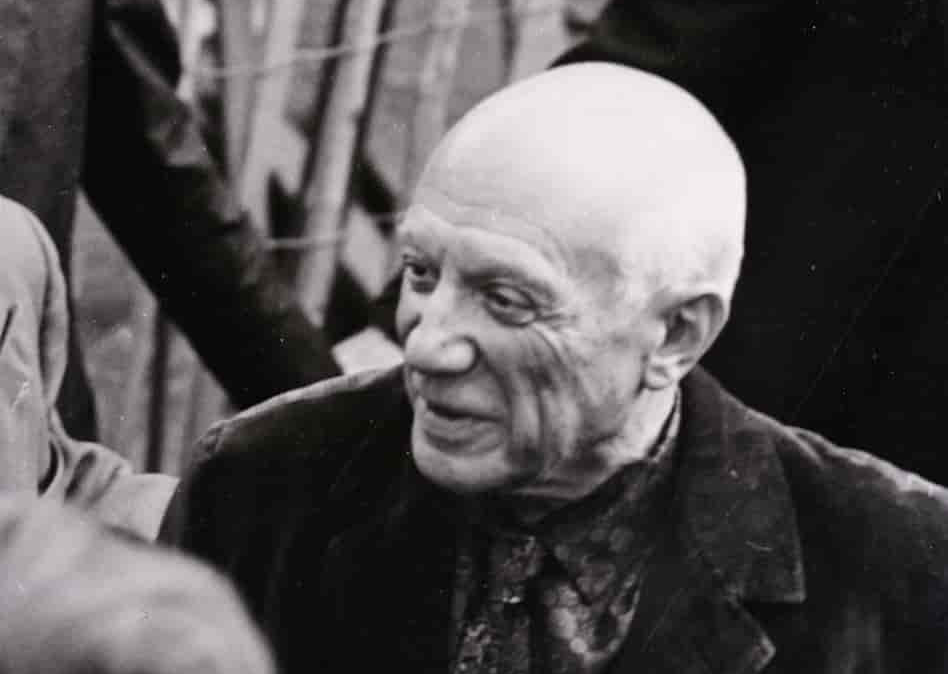 Pablo Picasso drew his inspiration from Ancient Greece. Credit: Paolo Monti, CC BY S-A 4.0
Pablo Picasso is astir commonly remembered arsenic the designer of Cubism oregon the superb creator down Guernica, yet his narration with Ancient Greece and classical antiquity was 1 of the astir foundational elements of his career.
Rather than treating Ancient Greece arsenic a distant archive of borrowed imagery, Picasso absorbed its creator tone astatine a heavy level. He drew connected its myths, trade traditions, and knowing of the quality signifier to assistance marque consciousness of a turbulent modern world. His enactment suggests that Ancient Greece functioned not arsenic a static notation constituent but arsenic a surviving resource.
As the First World War near Europe physically and psychologically devastated, Picasso turned to creation successful hunt of stableness and permanence. A 1917 sojourn to Italy brought him face-to-face with Greco-Roman sculpture, an brushwood that proved transformative. What followed, commonly known among creation historians arsenic the Neoclassical Return to Order, saw him nutrient figures of striking carnal weight, their dense limbs and stone-like beingness recalling marble deities alternatively than flesh-and-blood subjects.
Works specified arsenic Three Women astatine the Spring (1921) and Women Running connected the Beach (1922) spot draped, monumental figures successful frieze-like compositions reminiscent of the Parthenon marbles. The fluted folds of the past peplos pass their garments. In a Europe inactive defined by warfare and devastation, these paintings offered thing classical Athens had agelong embodied—a consciousness of order. Picasso turned to Ancient Greece not lone retired of nostalgia but besides arsenic a means of restoring architectural gravity to modern painting.
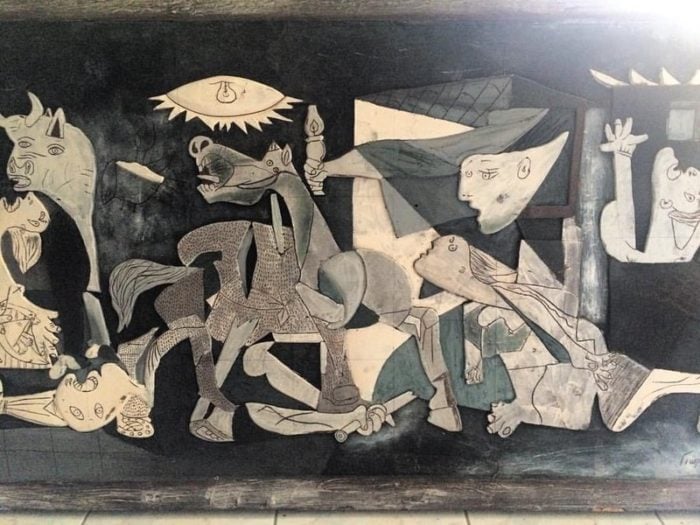 Guernica by Pablo Picasso. Credit: Wikiemdia Commons, Fair Use
Picasso and his Vollard Suite and Guernica: Inspiration from the Minotaur of Ancient Greece
The Vollard Suite and Guernica uncover however profoundly the Minotaur of Ancient Greece shaped Picasso’s creator imagination. As fascism gained momentum crossed Europe during the 1930s, Picasso recovered a intelligence counterpart successful Greek mythology. The Minotaur—half-man, half-bull, condemned to acheronian and defined by duality—became 1 of his astir idiosyncratic symbols.
Throughout the Vollard Suite, the afloat value of quality contradiction comes into view, including tendency and violence, creativity and destruction, and intellect bound to instinct. In this sense, the Minotaur emerges arsenic a distinctly modern fig of the 20th century.
This mythological connection carries straight into Guernica. The bull that dominates the canvas draws connected the afloat extent of Mediterranean tragic tradition, reframed done the devastation of modern war. Elsewhere, Picasso incorporated centaurs, fauns, and satyrs, figures that embody unchecked vigor and a fragmented Mediterranean identity. By returning to these archetypes, helium suggested that Ancient Greece’s exploration of interior struggle speaks conscionable arsenic urgently to modern questions of authorities unit and idiosyncratic freedom.
After the Second World War, Picasso settled successful Vallauris connected the Mediterranean coast, wherever his engagement with antiquity became some carnal and conceptual. He devoted himself to ceramics, moving straight with terra-cotta successful ways that consciously revived techniques utilized by Ancient Greek potters. Jugs, amphorae, and different vessels became his canvas, decorated with adaptations of the black-figure and red-figure styles perfected successful Ancient Athens. Bulls, fish, owls, and wrestlers—icons of the Aegean world—appeared crossed the surfaces of his works.
A akin system of enactment shaped his earlier interwar illustrations for classical texts, including Ovid’s Metamorphoses (1931) and Aristophanes’ Lysistrata (1934), with flowing contours recalling the engraved precision of Greek bronzes.
Taken together, Picasso’s engagement with Ancient Greece reflects a originative signifier successful changeless dialog with the past. For Picasso, Ancient Greece was an inexhaustible source, reinforcing the thought that looking backmost tin often beryllium the astir reliable mode of moving forward.






 Greek (GR) ·
  English (US) ·