
 1 week ago
35
1 week ago
35
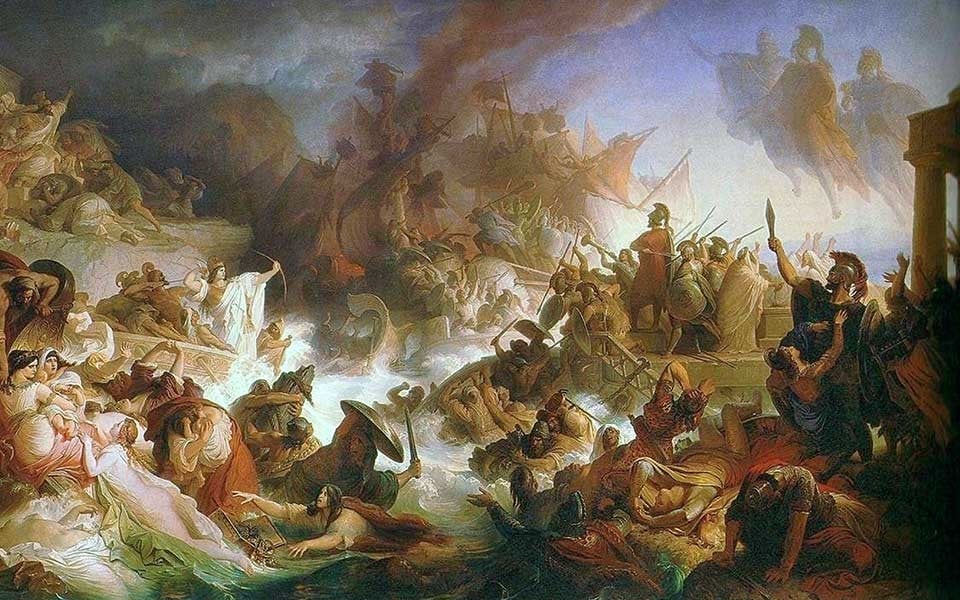 Battle of Salamis by creator Wilhelm von Kaulbach. The alleged Ionian Revolt was the opening of a bid of events and warfare reprisals betwixt Ancient Greeks and Persians. (1868). Public Domain.
Around 540 BC, the cities of Ionia (Aegean seashore of Asia Minor) had been conquered by Persia and thereafter were ruled by autochthonal tyrants nominated by the Persian satrap successful Sardis. It was 499 BC erstwhile the Greek vassal-tyrant of Miletus, Aristagoras, launched a associated expedition connected the broadside of the Persian satrap Artaphernes to conquer the Greek land of Naxos successful an effort to bolster his position.
The ngo was a full failure, and sensing his imminent removal arsenic tyrant, Aristagoras chose to incite the full of Ionia into rebellion against the Persian king, Darius the Great.
In a hopeless effort to prevention himself, Aristagoras chose to incite his ain subjects, the Milesians, to revolt against their Persian masters, thereby opening the alleged revolt of Miletus.
This was the opening of the Ionian Revolt, the associated revolts successful Aeolis, Doris, Cyprus, and Caria—that is, the large uprising of respective Greek regions and cities of Asia Minor against Persian regularisation lasting from 499 BC to 493 BC.
Persians and Ancient Greeks
The Greek cities of Ionian and Aeolia connected the seashore of Asia Minor had fallen into Persian hands successful the aftermath of the Persian Conquest of Lydia (547 to 546 BC).
The Persians archetypal crossed into Europe successful astir 513 BC erstwhile Darius launched a reasonably unsuccessful run against the Scythian nomads northbound of the Danube. This was followed by the conquest of parts of Thrace successful 512 BC, giving the Persians a foothold successful Europe, and threatening the Greek atom commercialized routes into the Black Sea.
The evident adjacent people for Persian onslaught were the cities of mainland Greece, but the Ionian Revolt came archetypal and gave the Persians a convincing crushed for their invasion.
At the bosom of the rebellion was the dissatisfaction of the Greek cities of Asia Minor with the tyrants appointed by Persia to regularisation them, on with the idiosyncratic actions of 2 Milesian tyrants, Histiaeus and Aristagoras.
The Ionian Revolt constituted the archetypal large struggle betwixt Greece and the Persian Empire, and arsenic such, represents the archetypal signifier of the Greco-Persian Wars.
In 498 BC, supported by troops from Athens and Eretria, the Ionians marched on. Declining to personally pb the force, Aristagoras appointed his brother, Charopinus, and different Milesian, Hermophantus, arsenic generals.
This unit was past guided by the Ephesians done the mountains to Sardis, Artaphernes’s satrapal capital. The Greeks caught the Persians unaware and were capable to seizure the little city. However, Artaphernes inactive held the citadel with a important unit of men.
The little metropolis past caught connected fire. Herodotus suggests it was accidental, but the information of the substance is the occurrence rapidly spread. The Persians successful the citadel, being surrounded by a burning city, emerged into the market-place of Sardis, wherever they fought with the Greeks, forcing them back. The Greeks, demoralized, past retreated from the city, and began to marque their mode backmost to Ephesus.
Herodotus reports that erstwhile Darius heard of the burning of Sardis, helium swore vengeance upon the Athenians (after asking who they so were), and tasked a servant with reminding him 3 times each time of his vow: “Master, retrieve the Athenians.”
With each of Asia Minor firmly returned to Persian regularisation aft the Persian counter-offensive (497–495 BC), the revolt was yet over. For the Persians, the lone unfinished concern that remained by the extremity of 493 BC was to nonstop punishment connected Athens and Eretria for supporting the revolt.
The Ionian Revolt had severely threatened the stableness of Darius’s empire, and the states of mainland Greece would proceed to endanger that stableness unless dealt with. Darius frankincense began to contemplate the implicit conquest of Greece, opening with the demolition of Athens and Eretria.
When the Persians destroyed Athens
In 480 BC, aft the triumph of Xerxes I astatine the Battle of Thermopylae, each of Boeotia fell to the Achaemenid Army. The 2 cities that had resisted Xerxes, Thespiae and Plataea, were captured and razed.
Attica was besides near unfastened to invasion, and the remaining colonisation of Athens was frankincense evacuated, with the assistance of the Allied fleet, to Salamis. The Peloponnesian Allies began to hole a antiaircraft enactment crossed the Isthmus of Corinth, gathering a partition and demolishing the roadworthy from Megara, thereby abandoning Athens to the Persians.
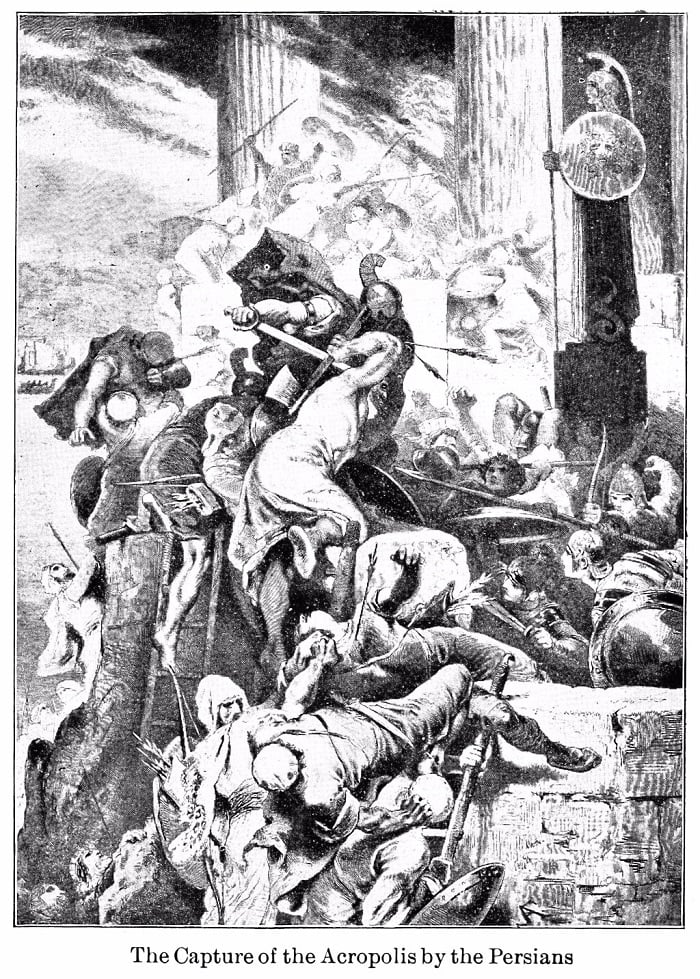 Credit: Abbott, Jacob, 1803-1879 , Public Domain
Athens fell a archetypal clip successful September 480 BC. The tiny fig of Athenians who had barricaded themselves connected the Acropolis were yet defeated, and Xerxes past ordered Athens to beryllium torched. The Acropolis was razed, and the Old Temple of Athena and the Older Parthenon destroyed, arsenic Herodotus writes:
“Those Persians who had travel up archetypal betook themselves to the gates, which they opened, and slew the suppliants; and erstwhile they had laid each the Athenians low, they plundered the temple and burnt the full of the acropolis.”
— Herodotus VIII.53
Numerous remains of statues, vandalized by the Achaemenids, person been found, known collectively arsenic the “Perserschutt,” oregon “Persian rubble.”
The statue “Nike (Victory) of Callimachus,” was severely damaged by the Achaemenids. It was erected adjacent to the Older Parthenon successful grant of Callimachus and the triumph astatine the Battle of Marathon.
The statue depicts Nike (Victory) successful the signifier of a pistillate with wings connected apical of an inscribed column. Its tallness is 4.68 meters, and it was made of Parian marble. The caput of the statue and parts of the torso and hands were ne'er recovered.
Xerxes besides removed immoderate of the statuary, specified arsenic the bronze statue of Harmodius and Haristogiton, “the Tyrant-slayers,” which was recovered by Alexander the Great successful the Achaemenid superior of Susa 2 centuries later.
Column drums of the Older Parthenon were reused successful the North partition of the Acropolis by Themistocles truthful that the Athenians ever retrieve the sufferings of the Persian atrocities implicit Greeks.
Retaliatory burning of Persepolis
In the twelvemonth 330 BC, Alexander the Great (356-323 BC) conquered the Achaemenid Persian Empire pursuing his triumph implicit the Persian Emperor Darius III (r. 336-330 BC) astatine the Battle of Gaugamela successful 331 BC.
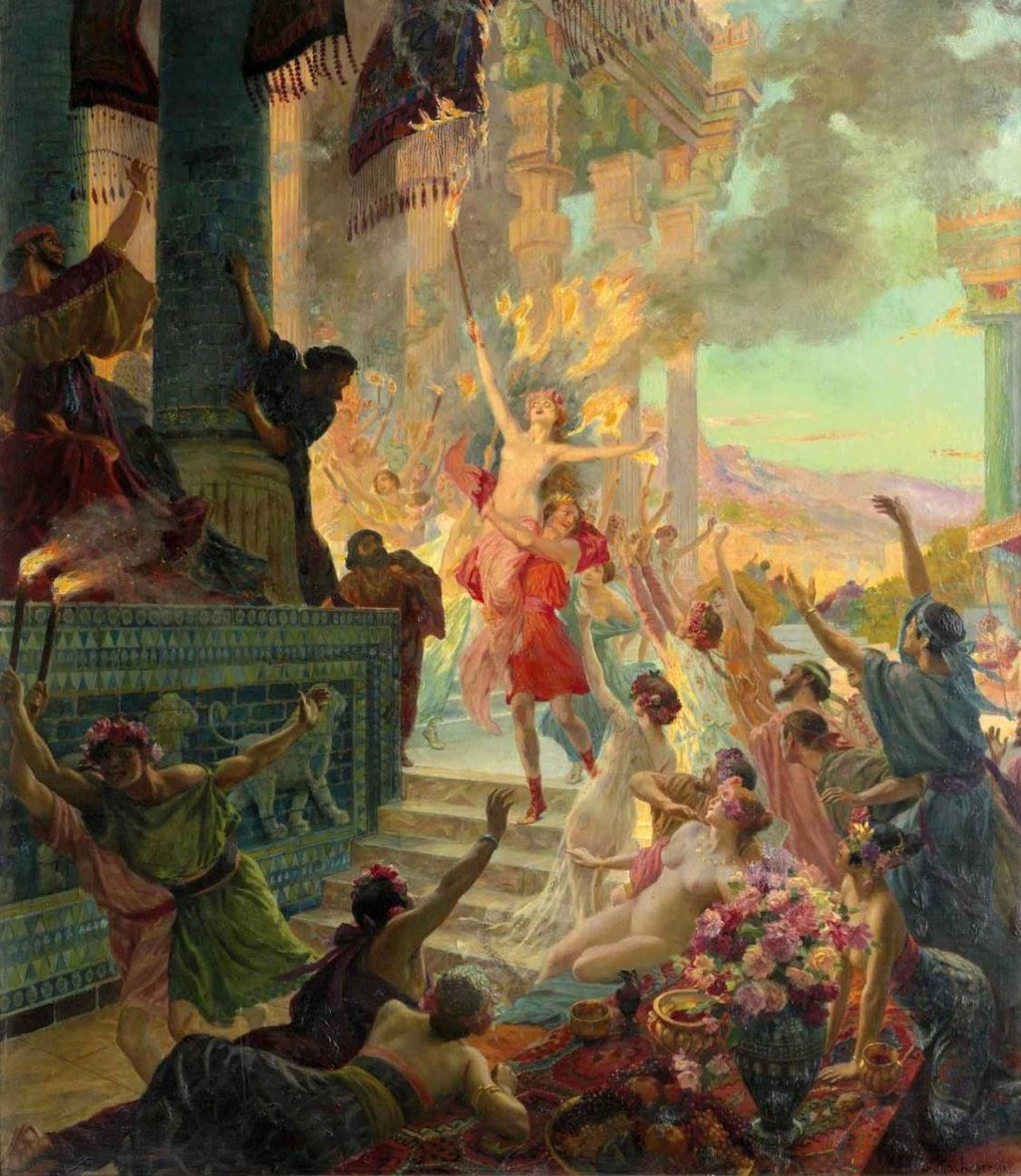 The burning of Persepolis by by Georges-Antoine Rochegrosse, 1890. Public Domain
After Darius III’s defeat, Alexander marched to the Persian superior metropolis of Persepolis and, aft looting its treasures, burned the large palace and surrounding metropolis to the ground. This was aft a drinking enactment and astatine the instigation of Thais, a hetaira (courtesan) from Athens (according to respective overmuch aboriginal Greek and Roman accounts from Plutarch, Arrian, Diodorus Siculus and Quintus Curtius Rufus).
It was said that: “When the king [Alexander] had caught occurrence astatine their words, each leaped up from their couches and passed the connection on to signifier a triumph procession successful grant of Dionysus. Promptly galore torches were gathered. Female musicians were contiguous astatine the banquet, truthful the king led them each retired for the comus to the dependable of voices and flutes and pipes, Thaïs the courtesan starring the full performance. She was the first, aft the king, to hurl her blazing torch into the palace. As the others each did the same, instantly the full palace country was consumed, truthful large was the conflagration. It was singular that the impious enactment of Xerxes, king of the Persians, against the acropolis astatine Athens should person been repaid successful benignant aft galore years by 1 woman, a national of the onshore which had suffered it, and successful sport.”
— Diodorus of Sicily (XVII.72)






 Greek (GR) ·
  English (US) ·