
 2 hours ago
19
2 hours ago
19
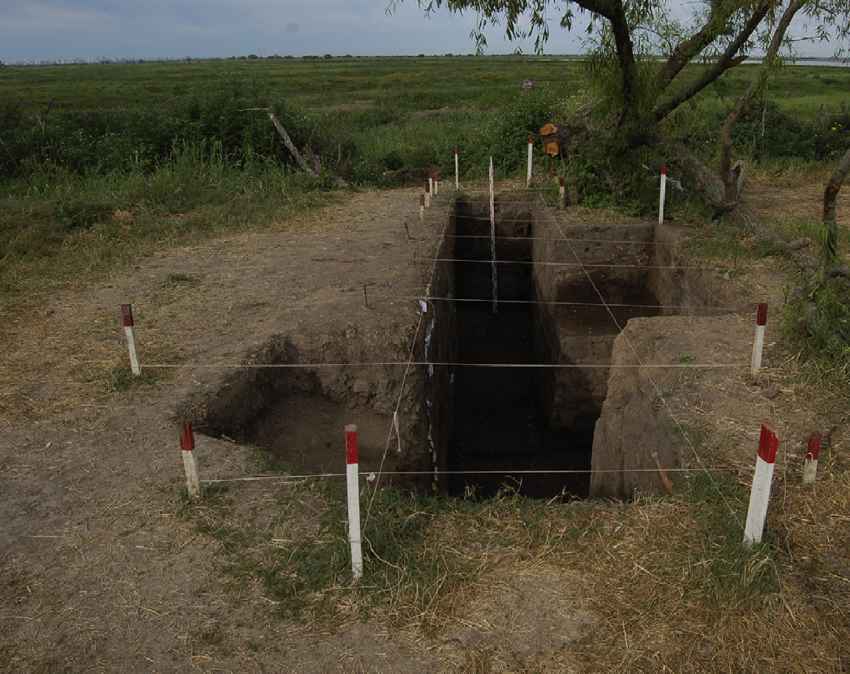 General presumption of Los Tres Cerros 1 excavation successful the Paraná River Delta. Credit: Adriana Mónica Blasi / Open Access
Scientists person reconstructed much than 6,000 years of human history successful South America’s confederate regions. The findings uncover that past populations were acold much genetically analyzable and geographically mobile than archaeology unsocial had suggested.
The survey was led by Kim-Louise Krettek of the University of Tübingen successful Germany and published successful Current Biology. Researchers analyzed genome-wide information from 52 past individuals buried crossed 31 sites successful present-day Argentina and Uruguay.
The individuals dated betwixt 6,000 and 150 years ago, spanning 4 regions: the cardinal and confederate Pampas, Northwest Patagonia, the Paraná River Delta and Lower Uruguay River, and the eastbound lowlands of Uruguay.
Three chiseled ancestries recovered successful the Middle Holocene Pampas
One cardinal uncovering challenges earlier assumptions astir the Middle Holocene Pampas. Researchers identified astatine slightest 3 genetically chiseled ancestries contiguous successful the region, not a azygous continuous familial illustration antecedently assumed.
The oldest 2 groups, dating to 7,700 and 6,800 years ago, stock a baseline ancestry. A 3rd group, dated to 6,000 years agone successful the confederate Pampas, shows beardown familial ties to populations from southeastern Patagonia, hundreds of miles to the south.
Scientists person uncovered astonishing details astir quality past successful South America, tracing 6,000 years of migration and familial diverseness crossed Argentina and Uruguay. pic.twitter.com/9DwbXK0bap
— Tom Marvolo Riddle (@tom_riddle2025) April 24, 2026
A abstracted ancestry of still-unknown geographic root entered the confederate Pampas astir 5,500 years ago. It grew importantly by 4,000 years agone and yet became the ascendant familial illustration crossed the region.
Researchers tracked this aforesaid ancestry reaching the Lower Uruguay River by 1,500 years agone and Northwest Patagonia by astatine slightest 600 years ago.
Andean ancestry persisted successful northwest Patagonia for millennia
In Northwest Patagonia, confederate Andean ancestry appears arsenic aboriginal arsenic 4,400 years agone and remained contiguous done assemblage times. One idiosyncratic astatine the Aquihueco site, besides dated to astir 4,400 years ago, showed an adjacent stronger Andean familial signal. Researchers accidental that this points to a apt caller migrant from the Andes into the region.
Along the Paraná River Delta, researchers recovered a wide familial disagreement betwixt individuals from the Upper and Lower Delta, some dating to astir 600 years ago.
This familial divided intimately matches antecedently documented differences successful ceramic styles betwixt the 2 areas. Together, the grounds suggests they represented chiseled taste communities contempt their geographic proximity.
Coastal dispersal reshaped South America’s quality history
The astir unexpected uncovering came from eastbound Uruguay. An idiosyncratic dated to 730 years agone showed wide familial connections to Sambaqui ammunition mound communities from the confederate seashore of Brazil.
Those communities were already linked to the dispersed of Kaingang ancestry and Je connection speakers. Researchers accidental that this points to a coastal colonisation question carrying this lineage from confederate Brazil into Uruguay.
Krettek said the findings amusement that large-scale quality movements were intimately tied to the singular taste diverseness that developed crossed South America’s confederate regions during some the Middle and Late Holocene.








 Greek (GR) ·
  English (US) ·