
 2 hours ago
11
2 hours ago
11
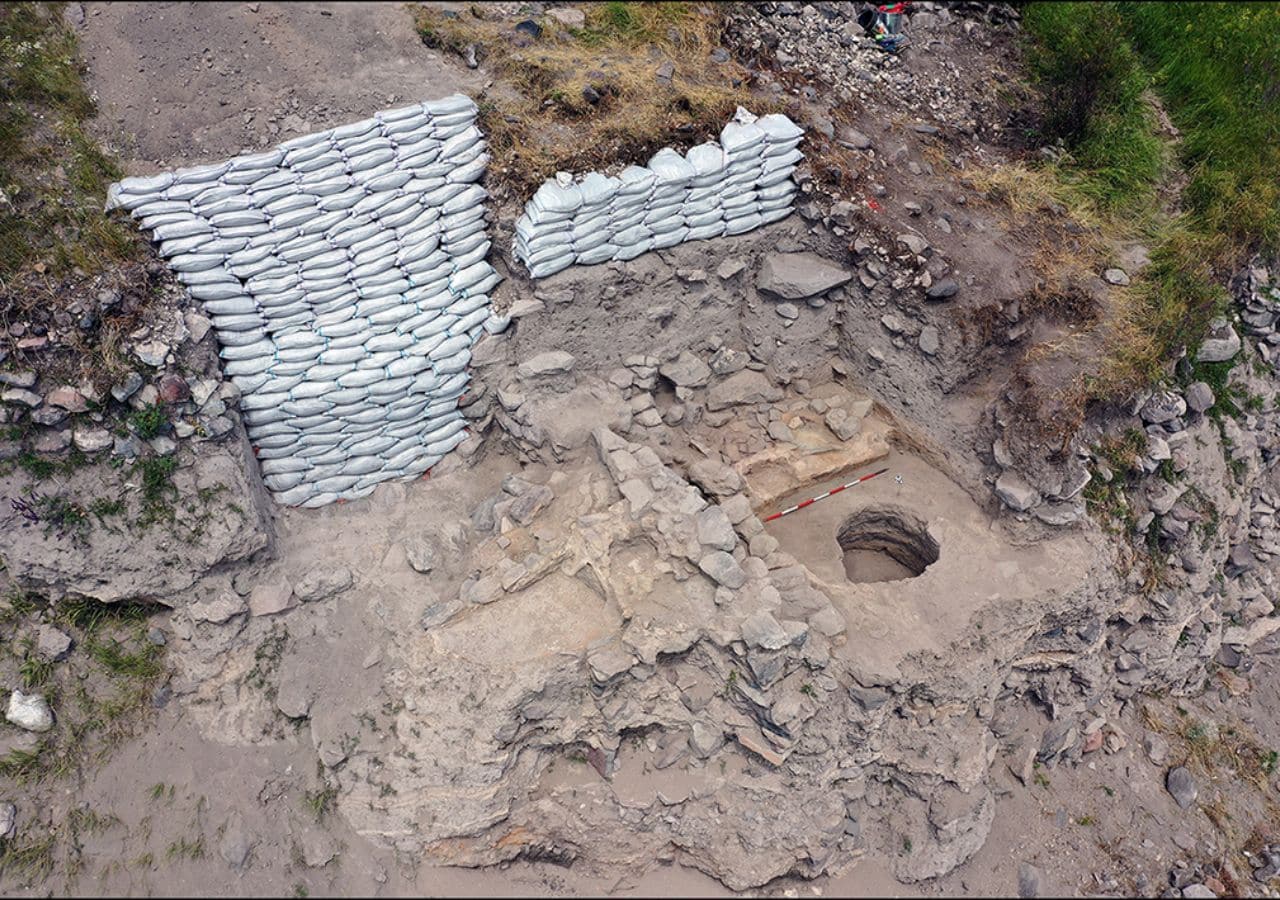 Southern aerial presumption of Meghreki Fortress. Credit: Samtskhe-Javakheti Project / Open Access
Ancient stone fortresses rising crossed the highlands of confederate Georgia are forcing researchers to reconsider what they knew astir a civilization that thrived determination for thousands of years. A caller survey published successful Antiquity documents however monolithic Cyclopean structures successful Georgia’s Javakheti Plateau served not conscionable arsenic subject defenses but arsenic portion of a complex, mobile nine with affluent ritual traditions stretching backmost to 3500 BC.
Roberto Dan of the International Association for Mediterranean and Oriental Studies successful Rome led the research. The study is the merchandise of a associated Georgian-Italian inaugural called the Samtskhe-Javakheti Project, which has been moving successful the Samtskhe-Javakheti state since 2017.
Researchers utilized outer imagery, GPS mapping and geographic accusation systems to survey the precocious plateau and behaviour targeted excavations.
Eight-year survey maps 168 sites crossed distant plateau
Over 8 years, the task documented 168 archaeological sites, including settlements, fortifications, and burial grounds. Sites specified arsenic Abulis Gora and Saro-1 amusement repeated quality enactment from the Bronze Age onward.
Extensive necropolises adjacent Bertakara and Lake Tabatskuri constituent to persistent funerary traditions crossed centuries. Earlier groundwork by the University of Melbourne and the Georgian National Museum helped found the region’s archaeological imaginable earlier the task expanded into the precocious plateau.
 Aerial presumption of Baraleti with excavation areas. Credit: Samtskhe-Javakheti Project / Open Access
Excavations astatine Baraleti Natsargora, a salient mound astatine the halfway of the plateau, uncovered concern layers spanning from astir 3500 to 500 BC. Researchers recovered a antiaircraft wall, home structures with partition walls and clay installations, and grounds of repeated burning events.
The site’s sanction virtually translates to “hill of ashes,” which the carnal grounds confirmed. A bronze star disk recovered adjacent the tract carries concentric bands of knobs, angular motifs, and evenly spaced perforations.
Similar objects crossed confederate Georgia typically look successful pistillate burials, suggesting this disk, present held astatine the Akhalkalaki Museum, came from a adjacent grave.
Ancient cyclopean structures successful Georgia output uncommon ritual discoveries
At Meghreki Fortress, partially exposed by roadworthy operation earlier researchers arrived, excavations revealed unbroken quality enactment from the Kura-Araxes civilization astir 3500 BC done the Iron Age and into the medieval period.
Two home structures dating to the Achaemenid period, astir the sixth to 4th centuries BC, contained clay installations decorated with incised and painted geometric designs successful red, white, and acheronian blue.
Dan noted that comparable decorated plaques look astatine adjacent sites of Digasheni and Amiranis Gora, suggesting a broader determination contented wherever decorated surfaces marked ritually important home spaces.
The findings overgarment the Javakheti Plateau not arsenic an isolated frontier but arsenic an progressive taste crossroads connecting highland and lowland communities crossed millennia. Future enactment volition absorption connected radiocarbon dating, ceramic analysis, and biology information to sharpen the chronological picture.







 Greek (GR) ·
  English (US) ·