
 2 hours ago
11
2 hours ago
11
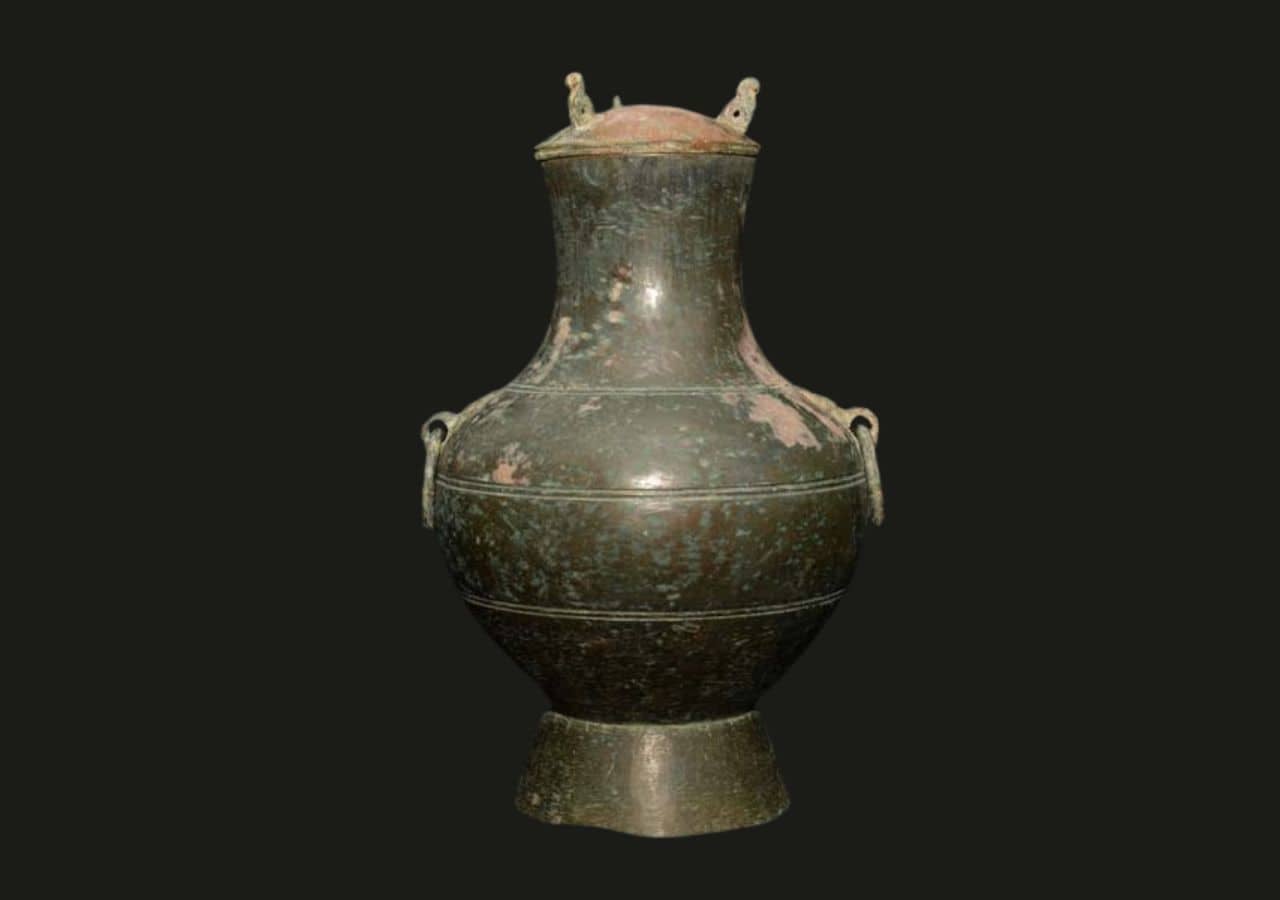 Bronze intoxicant kettle from the Qin Dynasty. Credit: Shaanxi Provincial Institute of Archeology
Archaeologists successful China person identified a 4th-century BC alcoholic beverage wrong a bronze vas unearthed from a Qin Dynasty tomb, shedding airy connected the blase brewing civilization of 1 of past China’s astir almighty states. The find dates to the Warring States period, betwixt 475 and 221 BC.
The liquid was recovered successful a garlic-shaped bronze vessel sealed wrong Tomb M39 astatine the Shanjiabao cemetery, located successful Guyuan City, Ningxia Hui Autonomous Region. The tract sits astir 2 kilometers (1.2 miles) southbound of the Qin Great Wall and served arsenic a burial crushed for garrison troops and section residents. A full of 183 tombs were excavated there, 179 of which belonged to the Qin people.
Ruru Chen of the School of Cultural Heritage astatine Northwest University, China, led the probe squad that conducted the study. Their findings were published successful the Journal of Archaeological Science: Reports.
Scientists unseal bronze bottle, extract past liquid inside
When scientists cautiously opened the sealed vessel, they extracted astir 3,740 milliliters (about 1 gallon) of clear, airy blue-green, odorless liquid, on with a tiny magnitude of sediment. The vessel had been sealed with textile connected the wrong and integrated daub connected the outside, a operation that helped sphere the contents for implicit 2 millennia.
A 2,300-year-old alcoholic beverage recovered successful a Qin Dynasty tomb confirms that past Chinese brewers mastered cereal-based fermentation during the Warring States period. pic.twitter.com/KTr1cKE0kN
— Tom Marvolo Riddle (@tom_riddle2025) April 23, 2026
Multiple analytical methods were applied to analyse the liquid. These included infrared spectroscopy, high-resolution wide spectrometry, and microscopic investigation of starch grains, works remains, and yeast.
The results confirmed the portion arsenic a cereal-based alcoholic beverage brewed chiefly from broomcorn millet and Triticeae, a atom radical that includes wheat and barley. Researchers detected 24 classes of integrated compounds, including amino acids, fatty acids, and carbohydrates. The liquid besides contained precocious concentrations of lactic acerb and oxalic acid, alongside a debased attraction of tartaric acid.
Millet-based alcoholic beverage confirmed successful Qin Dynasty tomb
The fermentation starter was identified arsenic “qu,” a mold-based cause derived from atom oregon herbs. Ancient Chinese texts picture the qu arsenic a accepted brewing tool, and its beingness successful the illustration aligns with that humanities record.
China holds 1 of the world’s oldest brewing traditions. Archaeological grounds of intoxicant residues successful the state stretches backmost to the early Neolithic period. However, astir earlier studies examined residues absorbed into pottery alternatively than existent liquid samples. Liquid residues, similar those recovered from Tomb M39, supply acold much elaborate accusation astir ingredients and accumulation methods.
Chen and the squad concluded that the Qin radical had mastered some brewing techniques and qu accumulation during the Warring States period. The garlic-shaped bronze vessel is simply a recognized artifact of Qin civilization and was wide utilized arsenic an intoxicant vas from the Warring States play done the Han Dynasty, astir 475 BC to 220 AD.
The survey deepens the knowing of past Chinese brewing and offers caller penetration into however aboriginal communities utilized determination grains to make fermentation exertion implicit time.



 Greek (GR) ·
  English (US) ·